
When a potential customer lands on yourcompany.freewebsitebuilder.com instead of yourcompany.com, their brain makes an instant judgment. That judgment happens in milliseconds, before they read a single word of your carefully crafted copy. The URL itself has already told them whether you're a serious business or a weekend side project.
This isn't about vanity. It's about the economic reality that customers make trust decisions based on signals they can verify instantly. Your domain name is the first technical handshake between your business and every visitor. Get it wrong, and you're fighting uphill before the conversation even starts.
The Subdomain Tax on Customer Perception
Free website builders love to offer you a subdomain. It costs them nothing and locks you into their ecosystem. But that subdomain carries a hidden tax: it tells your customers that you either don't know better or don't care enough to invest in your own digital presence.
Consider the psychological framing. When someone sees bakery.wixsite.com, they're not just seeing your bakery's website—they're seeing Wix's platform with your content renting space on it. The primary brand in that URL isn't yours. You've positioned yourself as a tenant, not an owner.
This matters especially for B2B transactions. A manufacturing shop looking for a new supplier isn't going to send a $50,000 purchase order to a company operating on a free subdomain. The URL itself signals operational immaturity, regardless of how sophisticated your actual capabilities might be.
SSL Certificates: The Non-Negotiable Security Baseline
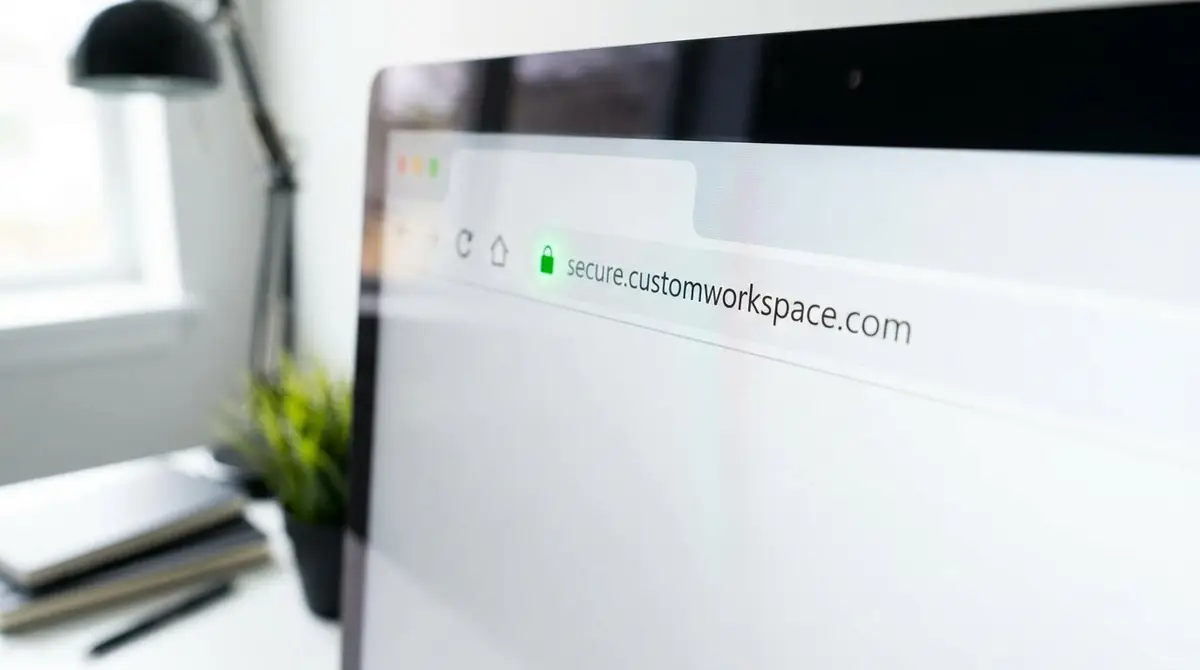
The padlock icon in the browser address bar isn't decorative. It's a binary trust signal that modern users have been trained to look for. Websites without HTTPS encryption display browser warnings that actively discourage visitors from proceeding.
SSL certificates encrypt the data flowing between your visitor's browser and your server. For any site collecting form data—contact inquiries, quote requests, customer information—operating without SSL is both a security liability and a credibility killer. Browsers now flag non-HTTPS sites as "Not Secure" in the address bar, a label that's impossible to overcome with persuasive copy.
The technical barrier to SSL used to be real. Certificates cost money, required manual installation, and needed annual renewal. That friction is gone. Modern platforms provision SSL certificates automatically through Let's Encrypt and handle renewal without human intervention. There's no longer any legitimate excuse for running a business website without encryption.
Domain Ownership as Brand Infrastructure
Your domain name is one of the few digital assets you can actually own. Social media handles can be suspended. Platform policies can change overnight. But a registered domain with proper ownership records is yours until you choose to let it expire.
This ownership extends beyond just the website. A custom domain enables professional email addresses (contact@yourcompany.com instead of yourcompany123@gmail.com), reinforces brand consistency across all customer touchpoints, and provides portability if you ever need to migrate platforms.
The domain also serves as a stable identifier for SEO. Search engines treat domains as trust signals, with age and consistency contributing to ranking authority. A subdomain on someone else's platform resets that clock and dilutes the SEO value of every piece of content you publish.
The AI Website Builder Advantage
The traditional friction between "easy website builder" and "professional custom domain" has collapsed. AI-powered website builders now handle the entire technical stack—domain registration, DNS configuration, SSL provisioning, and ongoing certificate renewal—as part of the core workflow.
Instead of choosing between a quick DIY site on a subdomain or hiring a developer to handle domain setup, businesses can describe what they need and get a live site on their own custom domain with SSL enabled by default. The AI handles the DNS records, certificate authorities, and configuration complexity that used to require technical expertise.
This removes the economic justification for subdomain compromises. When custom domain setup is automated and included rather than a complex add-on, there's no reason to launch with anything less than a professional URL structure.
First Impressions Are Technical Impressions
Your website URL loads before your logo. It appears in search results before your meta description. It's visible in every link share, every email signature, every business card. The domain name and security certificate are the technical foundation of your brand's digital credibility.
Customers won't consciously articulate why company.com feels more trustworthy than company.platformname.com. They just know one looks like a real business and the other looks like someone testing the waters. That gut-level distinction translates directly into conversion rates, average order values, and customer lifetime value.
For businesses serious about growth, the custom domain with SSL isn't a nice-to-have upgrade—it's table stakes. The good news is that modern tools have made it trivially easy to get right from day one. Platforms like JellyMachine build this professional foundation into the AI website creation process, so you never have to choose between speed and credibility.