
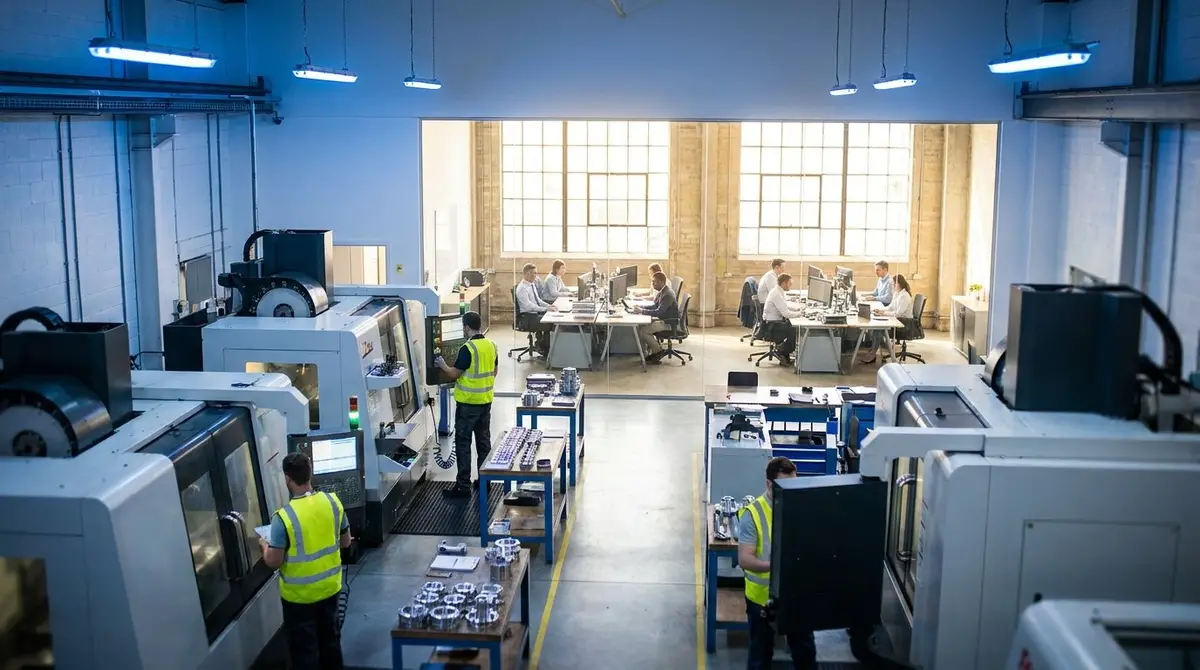
Walk into most manufacturing facilities and you'll find two distinct worlds. On the shop floor, operators know exactly which jobs are running, which stations are bottlenecked, and which orders are ahead of schedule. Walk fifty feet to the sales office, and ask when Order #4782 will ship. You'll get a shrug, a phone call to the floor supervisor, and a guess.
This invisible handoff—the moment production data stops flowing to the people who need it—costs manufacturers millions in rushed shipments, broken promises, and customer churn. The information exists. It's being generated in real time. But it dies at the factory gate, trapped in systems that don't speak to the front office.
The Data Exists, But Nobody Can See It
Production tracking systems capture everything: which phase a job is in, who's working on it, when it started, how much material was consumed. Operators scan barcodes, log completions, flag issues. The data is rich, timestamped, and accurate.
But that data lives in a production database that sales can't access. Customer service can't log in to check order status. Finance can't see which jobs consumed more labor than quoted. The sales team promises a delivery date based on a spreadsheet that hasn't been updated in three days.
The invisible handoff happens because production systems and customer-facing systems evolved separately. One vendor built the shop floor tracker. Another built the CRM. A third handles invoicing. Nobody built the bridge.
The Ripple Effect of Blind Handoffs
When production data stays invisible, the consequences cascade across the entire business. Sales reps can't give customers real answers. They say "let me check" and disappear for twenty minutes. Or worse, they guess—and guess wrong.
Customer service fields angry calls about late orders that actually shipped yesterday. The tracking update just never made it to their system. Finance bills for quoted hours, not actual hours, because they can't see what really happened on the floor. Margin erosion becomes invisible until the quarterly review.
Procurement orders materials based on scheduled jobs, not real-time phase completions. They over-order to be safe, tying up cash in inventory. Or they under-order and halt production when a job moves faster than expected.
Why Integration Projects Fail
Most manufacturers recognize the problem and try to solve it with integration. They hire consultants to connect the production tracker to the ERP, the ERP to the CRM, the CRM to the invoicing system. Six months and fifty thousand dollars later, they have a Rube Goldberg machine that breaks every time one vendor pushes an update.
The fundamental issue isn't technical—it's architectural. Systems designed in isolation will always resist integration. APIs get bolted on as afterthoughts. Data models don't align. One system tracks jobs by order number, another by customer ID, a third by production batch. Mapping tables multiply. Sync delays compound.
Even when integration technically works, it creates a new problem: latency. Production updates every five seconds. The sync runs every fifteen minutes. Sales sees stale data and makes decisions on outdated information. The handoff is no longer invisible—it's just slow enough to still cause problems.
The Case for Native Visibility
The solution isn't better integration—it's eliminating the need for integration entirely. When production tracking and customer-facing operations live in the same system, the handoff disappears. A job moves from welding to powder coating, and that update is instantly visible to everyone who needs it: the operator at the next station, the sales rep on a call with the customer, the finance team preparing the invoice.
Native visibility means sales reps open a customer record and see live production status without switching systems. Customer service pulls up an order and knows exactly which phase it's in. Finance sees actual labor and material consumption on the same screen where they generate invoices.
This isn't a dashboard that aggregates data from multiple sources—it's a single source of truth where production and customer data coexist. No sync delays. No mapping tables. No integration consultants on retainer.
How JellyMachine Eliminates the Handoff
JellyMachine's Jelly Flow production tracking lives inside the same platform as Jelly Boards CRM. When an operator logs a phase completion on a station tablet, that update appears instantly on the customer's Kanban card. Sales reps see production status without leaving the pipeline view. Customer service opens a support ticket and sees the job's current phase, not a three-day-old estimate.
The command-center dashboard shows real-time shop floor activity alongside sales pipeline metrics. Finance sees which jobs are consuming more resources than quoted—while the job is still in progress, not after it ships. Procurement sees phase completions and adjusts material orders based on actual consumption, not scheduled forecasts.
Because production tracking, CRM, and invoicing share the same database, there's no invisible handoff. Data flows from the shop floor to the customer-facing team in real time, with zero integration overhead. The factory gate becomes transparent.
The invisible handoff isn't a technical problem—it's an architectural one. As long as production data and customer data live in separate systems, manufacturers will struggle with blind spots, broken promises, and margin leakage. The solution isn't better integration. It's a platform where the handoff never happens because the data never leaves.